In the medical industry, the reliability and cleanliness of every component can directly impact patient safety and outcomes. Instruments, implants, and medical devices require surfaces that are smooth, corrosion resistant, and free from contaminants. Finishing is not just an aesthetic concern—it is a fundamental part of ensuring sterility, functionality, and biocompatibility.
Metal Finishing Group supports medical device manufacturers, instrument makers, and equipment suppliers with specialized finishing services that meet stringent standards. From surgical tools to diagnostic equipment, our processes improve corrosion resistance, enhance cleanability, and extend service life. By combining advanced techniques like electropolishing and passivation with proven plating solutions, we help ensure medical components perform reliably in critical environments.
Industry-Specific Applications
The medical sector has highly specialized needs, with parts ranging from small surgical instruments to complex diagnostic equipment. Each application demands a unique finishing solution.
Surgical Instruments
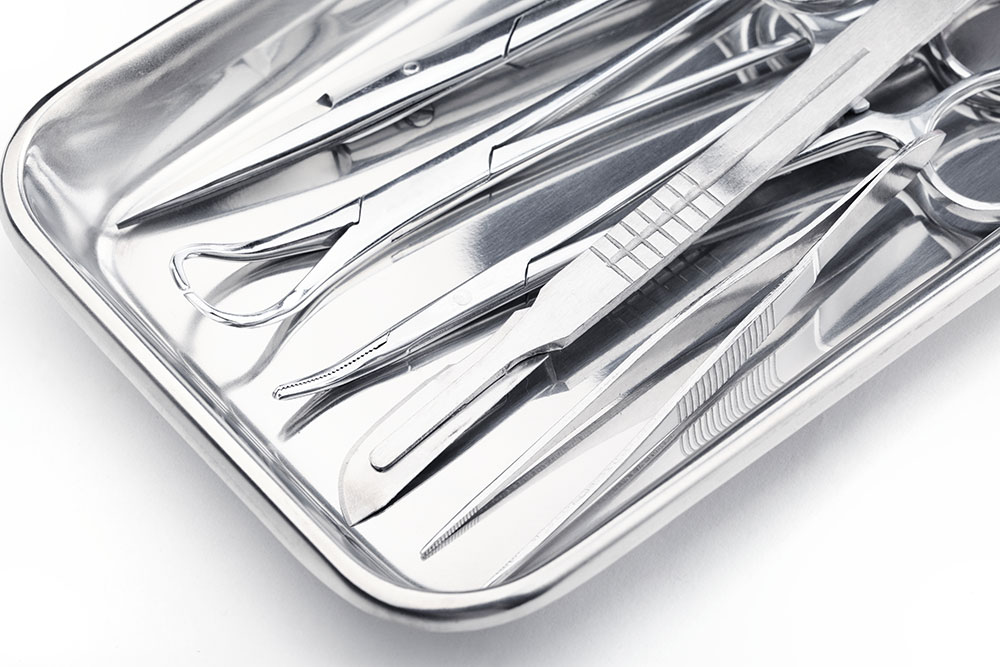
Stainless steel instruments such as forceps, scissors, and clamps require passivation to remove free iron and enhance corrosion resistance. Electropolishing is often applied to further smooth and brighten surfaces, reducing areas where bacteria could accumulate and ensuring easier sterilization.
Implants and Orthopedic Devices
Medical implants, including orthopedic screws, plates, and prosthetic components, benefit from nickel and oxide coatings that provide wear resistance and surface stability. Electropolishing is also used to enhance biocompatibility by minimizing micro-roughness.
Diagnostic and Imaging Equipment
Components in MRI, CT, and laboratory instruments often require nickel, silver, or tin plating for conductivity and shielding. Passivation is used on stainless housings and fixtures to maintain a clean, corrosion-resistant finish.
Hospital and Surgical Equipment Hardware
Hardware such as fasteners, connectors, and fittings used in hospital equipment must resist cleaning agents and sterilization cycles. Zinc, nickel, and oxide finishes provide the necessary durability and corrosion protection in these demanding environments.
Together, these processes ensure that medical devices and instruments remain safe, reliable, and effective throughout their lifespan.
Capabilities and Processes for Medical Finishing
Metal Finishing Group offers a comprehensive set of finishing processes tailored to the strict demands of the medical industry.
- Electropolishing – Creates ultra-smooth surfaces on stainless steel, reducing surface irregularities and improving sterilization efficiency.
- Passivation (Nitric or Citric) – Removes free iron and contaminants from stainless steel, enhancing corrosion resistance and ensuring compliance with medical standards.
- Nickel Sulfamate – Provides low-stress, ductile coatings ideal for components that must withstand repeated mechanical stress.
- Electroless Nickel – Offers uniform coating thickness across complex geometries, improving wear resistance and extending service life.
- Black Oxide (Stainless Steel) – Applied to certain instruments and hardware for reduced reflectivity and a professional finish.
- Silver and Tin Plating – Applied to medical electronics and diagnostic devices for conductivity and solderability.
- Copper Underplating – Used as a foundation layer for adhesion in multi-layer finishes.
Additional support services such as masking, bead blasting, and polishing ensure precise finishing without interfering with the functional requirements of each medical part.
Compliance and Performance Standards
The medical industry is one of the most heavily regulated sectors, and finishing processes must comply with strict international and domestic standards. Metal Finishing Group aligns its processes with:
- ASTM A967 / AMS 2700 for stainless steel passivation
- ASTM B912 for electropolishing stainless steel
- ISO 13485 quality management for medical devices
- FDA guidance for biocompatibility and cleanability
- RoHS and REACH environmental directives
Our quality assurance procedures include validation, traceability, and certification of compliance. Each medical project is processed with full documentation to support regulatory submissions and audits.
Benefits of Metal Finishing for Medical Components
Proper finishing provides measurable benefits that directly affect the performance and safety of medical devices.
- Enhances corrosion resistance, ensuring instruments withstand sterilization and cleaning cycles without degrading
- Improves biocompatibility of implants and surgical devices by reducing surface irregularities
- Extends service life of tools and equipment, lowering replacement and maintenance costs
- Increases cleanability, minimizing areas where bacteria or contaminants could remain
- Provides conductivity for medical electronics, ensuring reliable diagnostic performance
- Supports compliance with FDA, ISO, and ASTM standards critical to product approvals
These advantages make finishing a vital part of the medical device manufacturing process, ensuring patient safety while maintaining product quality and reputation.
Why Work with Metal Finishing Group
Metal Finishing Group brings experience and precision to every medical project. Our team understands the sensitivity of the industry and the importance of meeting exacting standards. Whether we are finishing surgical tools, implants, or hospital equipment hardware, our processes are tailored to achieve the highest levels of cleanliness, corrosion resistance, and performance.
By combining state-of-the-art equipment with rigorous quality control, we deliver finishes that meet regulatory expectations and practical performance needs. From prototypes to full production, we provide reliable turnaround times, detailed certifications, and consistent quality.
Contact Metal Finishing Group to discuss your medical device or equipment finishing requirements. Our electropolishing, passivation, and plating services are designed to meet the toughest standards in the industry and help ensure safe, reliable performance.